Responsible Deployment
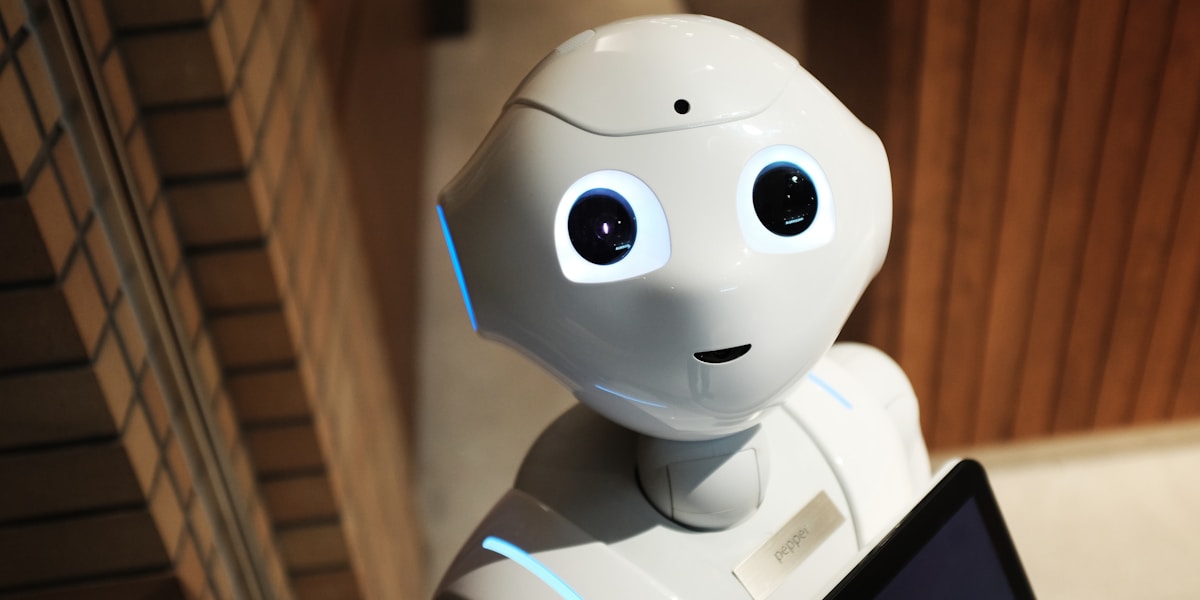
Why this matters: Powerful robots require powerful responsibility. This chapter covers the ethical, safety, and societal considerations of deploying physical AI systems.
Introduction: With Great Power...
A humanoid robot is not a smartphone app. It can physically interact with the world—and that means it can physically harm people, damage property, or have unintended consequences. Responsible deployment is not optional.
Safety Standards
ISO Standards for Robots
| Standard | Scope | Key Requirements |
|---|---|---|
| ISO 10218 | Industrial robots | Safety distances, guarding |
| ISO/TS 15066 | Collaborative robots | Force/power limiting |
| ISO 13482 | Personal care robots | Risk assessment |
| ISO 26262 | Automotive | Functional safety levels |
Safety Integrity Levels (SIL)
graph TD
    A[Hazard Analysis] --> B{Risk Level}
    B -->|Low| C[SIL 1<br/>Basic safety]
    B -->|Medium| D[SIL 2<br/>Redundancy]
    B -->|High| E[SIL 3<br/>Fail-safe design]
    B -->|Critical| F[SIL 4<br/>Highest integrity]

Risk Assessment
Hazard Identification
| Hazard Type | Example | Mitigation |
|---|---|---|
| Mechanical | Pinch points, crushing | Guarding, force limits |
| Electrical | Shock, fire | Insulation, certification |
| Software | Unexpected behavior | Testing, watchdogs |
| Cyber | Hacking, data theft | Encryption, hardening |
Risk Matrix
class RiskAssessment:
    SEVERITY = {
        'negligible': 1,
        'minor': 2,
        'moderate': 3,
        'severe': 4,
        'catastrophic': 5
    }

    PROBABILITY = {
        'rare': 1,
        'unlikely': 2,
        'possible': 3,
        'likely': 4,
        'almost_certain': 5
    }

    def assess(self, hazard):
        risk_score = (
            self.SEVERITY[hazard.severity] *
            self.PROBABILITY[hazard.probability]
        )

        if risk_score > 15:
            return "UNACCEPTABLE - Redesign required"
        elif risk_score > 8:
            return "HIGH - Mitigation required"
        elif risk_score > 4:
            return "MEDIUM - Consider mitigation"
        else:
            return "LOW - Acceptable with monitoring"
Human-Robot Interaction
Separation Strategies
| Strategy | Description | Use Case |
|---|---|---|
| Spatial | Physical barriers | High-speed industrial |
| Temporal | Time-based access | Maintenance windows |
| Speed/Force | Power limiting | Collaborative work |
| Hand-Guiding | Manual robot movement | Teaching |
Communication
Robots must communicate their intent:
class IntentCommunicator:
    def __init__(self):
        self.led_controller = LEDController()
        self.speaker = AudioSystem()

    def signal_intent(self, action):
        if action == 'moving':
            self.led_controller.set_color('blue', pulsing=True)
            self.speaker.play_tone('moving_alert')
        elif action == 'stopping':
            self.led_controller.set_color('red', solid=True)
            self.speaker.play_tone('stop_chime')
        elif action == 'ready':
            self.led_controller.set_color('green', solid=True)

Ethical Considerations
Key Questions
- Displacement: Will this robot replace human workers?
- Privacy: Does it collect personal data?
- Autonomy: Who is responsible for its decisions?
- Equity: Who benefits and who is harmed?
Ethical Framework
graph TD
    A[Proposed Deployment] --> B{Privacy Impact?}
    B -->|Yes| C[Data Governance Review]
    B -->|No| D{Employment Impact?}

    C --> D
    D -->|Yes| E[Transition Planning]
    D -->|No| F{Safety Certified?}

    E --> F
    F -->|No| G[Safety Assessment]
    F -->|Yes| H[Deployment Approved]
    G --> F
Transparency
Document:
- What the robot can and cannot do
- How decisions are made
- How data is used
- How to report problems
Deployment Checklist
Pre-Deployment
- Complete risk assessment
- Pass safety certification
- Train operators and maintenance staff
- Establish emergency procedures
- Set up monitoring and logging
- Create incident response plan
During Deployment
- Monitor performance metrics
- Review incident reports
- Update software safely
- Maintain safety systems
- Gather user feedback
Continuous Improvement
class DeploymentMonitor:
    def __init__(self):
        self.incidents = []
        self.near_misses = []
        self.feedback = []

    def log_incident(self, incident):
        self.incidents.append(incident)
        self.notify_safety_team(incident)

        if incident.severity > 3:
            self.pause_deployment()

    def generate_report(self):
        return {
            'incidents': len(self.incidents),
            'near_misses': len(self.near_misses),
            'uptime': self.calculate_uptime(),
            'recommendations': self.analyze_patterns()
        }
Regulatory Landscape
By Region
| Region | Key Regulations | Focus |
|---|---|---|
| EU | AI Act, Machinery Directive | Risk-based, human rights |
| US | OSHA, NIST AI RMF | Workplace safety |
| China | GB standards | Industrial focus |
| Japan | JIS standards | Service robots |
Emerging Trends
- AI transparency requirements
- Human oversight mandates
- Liability frameworks for autonomous systems
- Cybersecurity regulations
Key Takeaways
Summary
- Safety is non-negotiable: Follow ISO standards
- Risk assessment must be systematic
- Human-robot interaction requires clear communication
- Ethical considerations extend beyond safety
- Regulatory compliance varies by region
- Continuous monitoring ensures ongoing safety
Further Reading
- Chapter 4.1: Digital Twins
- Chapter 4.2: Benchmarks & Debugging
- Chapter 1.1: What is Physical AI?
"The goal is not to build robots that are safe. The goal is to build a world where robots make life better for everyone."